

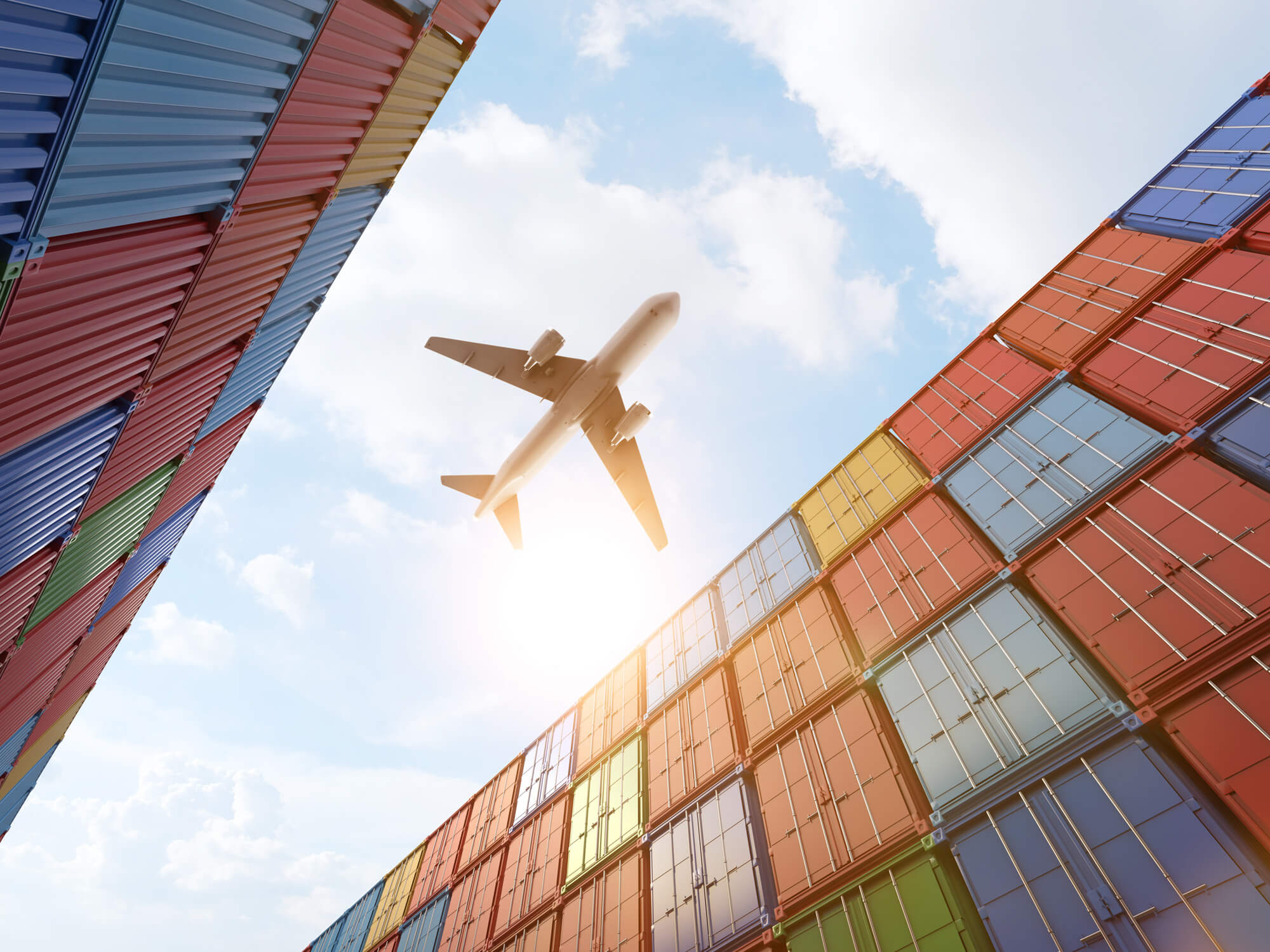
The right decision can influence stock availability, cash flow, customer deadlines, warehousing costs and the resilience of your supply chain.
There is no single “best” option for every shipment. Air freight is usually chosen for speed and urgency; sea freight is usually chosen for scale and cost efficiency. The most effective choice depends on what you are shipping, where it is going, how quickly it needs to arrive and the total commercial impact of the journey.
At MSK Logistics, we arrange air and sea freight for businesses moving goods worldwide. This guide compares the two methods in practical terms so you can decide which is the better fit for your shipment.
| Factor | Air Freight | Sea Freight |
|---|---|---|
| Speed | Usually measured in days | Usually measured in weeks |
| Cost | Typically higher | Typically lower for larger volumes |
| Best for | Urgent, valuable or time-sensitive cargo | Heavy, bulky or planned shipments |
| Capacity | More limited by aircraft size and weight | Very high container and vessel capacity |
| Reliability | Frequent schedules and fast recovery options | Reliable, but port congestion and sailing schedules can affect timing |
| Carbon intensity | Generally higher per tonne-km | Generally lower per tonne-km |
| Typical formats | Airport-to-airport or door-to-door | FCL, LCL, port-to-port or door-to-door |
What Is Air Freight?
Air freight is the movement of goods by aircraft. It is the fastest mainstream option for international freight and is commonly used when time matters more than achieving the lowest possible transport cost.
Typical air freight shipments include urgent engineering parts, electronics, medical equipment, high-value goods, fashion, samples, time-sensitive stock and products needed to prevent production downtime. Depending on the lane and service, international air freight can often move in a matter of days, although collection, security screening, customs and final delivery all form part of the total transit time.
When air freight makes sense
- You are working to a fixed customer or production deadline.
- The goods are valuable relative to their size or weight.
- A stock shortage would cost more than the premium for faster transport.
- The shipment is comparatively small, urgent or difficult to replace.
- You need a fast recovery option after a supply-chain disruption.
Advantages of Air Freight
1. Speed
The clearest advantage is transit time. When a shipment needs to cross continents quickly, air freight can reduce a journey of several weeks to a matter of days.
2. Schedule frequency
Major international airports often have frequent services, giving businesses more routing options and making it easier to recover from a missed connection than on less frequent ocean sailings.
3. Security
Air cargo moves through controlled airport environments with formal security procedures. That can make it attractive for high-value, sensitive or time-critical goods.
4. Lower inventory exposure
Faster replenishment can reduce the amount of safety stock a business needs to hold. For some companies, the working-capital benefit matters as much as the freight rate.
Potential Drawbacks of Air Freight
- Higher transport cost than sea freight on most comparable shipments.
- More restrictive size, weight and dangerous-goods requirements.
- Higher carbon emissions per tonne of cargo moved.
- Volumetric weight can make light but bulky consignments unexpectedly expensive.
What Is Sea Freight?
Sea freight moves cargo by ocean vessel, usually in containers. It is the backbone of global trade and is particularly well suited to heavy, bulky and high-volume shipments where lower transport cost matters more than speed.
Businesses can book a Full Container Load (FCL), where they use a container for their own shipment, or a Less than Container Load (LCL), where cargo shares container space with other consignments. The right option depends on volume, route, frequency and the nature of the goods.
When sea freight makes sense
- You are moving pallets, machinery, furniture, stock or other large consignments.
- The shipment is heavy or bulky.
- You can plan inventory several weeks ahead.
- Cost per unit is a major priority.
- You want to reduce transport emissions per tonne compared with air freight.
Advantages of Sea Freight
1. Cost efficiency at scale
For large and heavy shipments, ocean freight generally offers a much lower transport cost per unit than air freight.
2. Capacity
Containers and specialist ocean services can accommodate volumes and dimensions that would be impractical or uneconomical by air.
3. FCL and LCL flexibility
You do not always need a full container. LCL lets smaller consignments share container space, while FCL can be efficient when volume is high enough to justify dedicated capacity.
4. Lower carbon intensity
MSK Logistics - SEO Optimised Blog CollectionFor businesses with sustainability targets, ocean freight generally produces fewer emissions per tonne moved than air freight, although the exact footprint depends on route, vessel, load factor and onward transport.
Potential Drawbacks of Sea Freight
- Longer end-to-end transit times.
- Port congestion, weather and sailing changes can affect schedules.
- More planning is usually required to avoid stock shortages.
- LCL shipments can involve additional consolidation and handling stages.
Which Is Cheaper: Air Freight or Sea Freight?
Sea freight is normally cheaper on the transport invoice, especially as shipment weight and volume increase. But the cheapest freight rate is not always the lowest total business cost.
A useful comparison should include inventory holding costs, warehousing, lost sales, production downtime, the value of the goods, customer penalties and the cost of missing a seasonal sales window. If a delayed component could stop a production line, paying more for air freight may be commercially cheaper overall.
Air Freight vs Sea Freight Transit Times
Transit times vary significantly by origin, destination, service level, customs requirements and carrier schedules. As a broad planning rule, air freight is usually measured in days while long-haul sea freight is usually measured in weeks.
For a live comparison, ask MSK for both options on the same shipment. That gives you a realistic rate and transit estimate for the actual route rather than relying on generic averages.
A Simple Way to Decide
- Choose air freight when the financial impact of waiting is higher than the additional freight cost.
- Choose sea freight when the shipment is large, heavy, planned and cost-sensitive.
- Ask for both options when you are unsure - the difference in total landed cost may be smaller or larger than expected.
- Consider a mixed strategy: planned stock by sea, urgent replenishment by air.
Why Choose MSK Logistics?
MSK Logistics provides air, sea, road and courier solutions backed by customs support and direct access to an experienced team. Rather than pushing one mode, we look at the shipment, deadline, dimensions, destination and budget, then help you compare the available options.
That means you can make a commercial decision based on the whole journey - not just a headline freight rate.